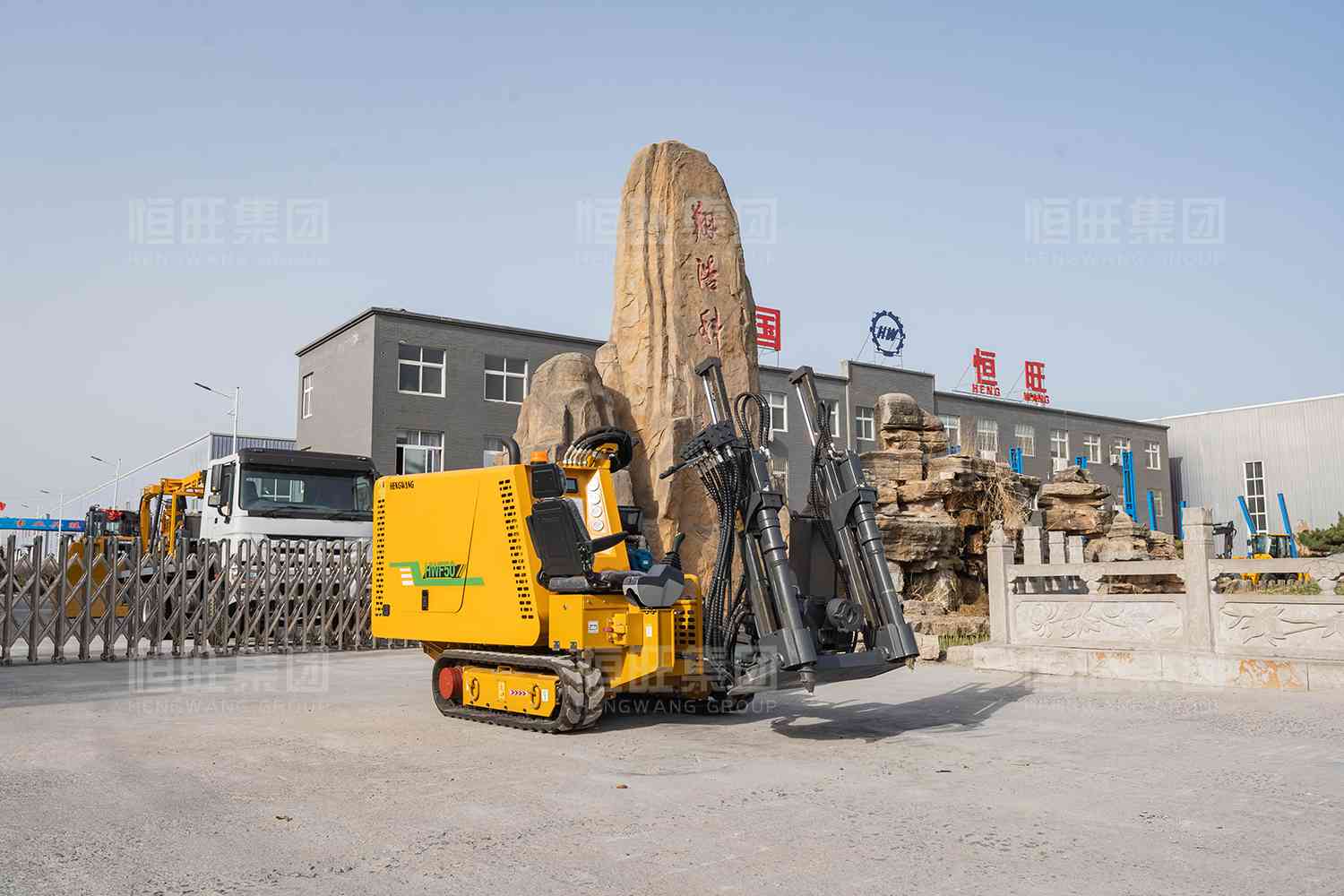
1. First, Consider Project Requirements: Scale and Depth
The scale of the construction project and the depth of the borehole are the basic criteria for choosing a horizontal directional drill. For small - scale, shallow - depth construction, such as laying simple pipelines in a community, a small - sized horizontal directional drill suffices. It doesn’t need extremely high power and torque and can easily handle operations in soft soil layers. However, for large - scale projects with deep boreholes and complex geology, you must choose a horizontal directional drill with high power and strong torque. Only then can it withstand the challenges of high - difficulty drilling and ensure the construction schedule.
2. Pay Attention to Core Performance: Thrust and Traction
Thrust and traction are the “hard - power” indicators of a horizontal directional drill. The greater the thrust, the faster the drilling speed, and it can meet the demands of large - diameter and deep - borehole operations. When choosing, ensure that the thrust and traction of the horizontal directional drill match the actual project needs, so that work can be efficient.
3. Understand the “Temperament” of Geology: Soil and Rock Layers
Different geological conditions have very different requirements for horizontal directional drills. If the construction site has soft soil, the drilling difficulty is low, and a low - power drill will do. But if you encounter “tough nuts” like rock or hard soil layers, you must choose a large - sized horizontal directional drill with sufficient propulsion force and strong torque. Only in this way can it smoothly pass through underground obstacles and prevent geology from slowing down the project progress.
4. Adapt to the Operating Environment: Space and Conditions
The construction site space and environment are complex and varied, so choosing a horizontal directional drill must be “adapted to local conditions”. If the site is narrow, such as constructing in the narrow streets of an old urban area, a horizontal directional drill with good mobility and flexible operation is more favorable. At the same time, consider factors like weather, soil type, and ambient temperature to ensure that the selected horizontal directional drill can adapt to the special requirements of the construction site and operate stably regardless of the environment.
In short, don’t choose a horizontal directional drill blindly. Consider factors such as project scale and depth, geological conditions, core performance, and operating environment comprehensively. Only by selecting the most suitable model can the engineering construction “go smoothly” and be completed successfully.